
Shame, Boundaries & RSD: How Adapted CBT Can Help - A Conversation with Dr Anita
From shame to people-pleasing, Dr Anita explains how Adapted CBT can help ADHDers build boundaries and co-regulate with compassion.


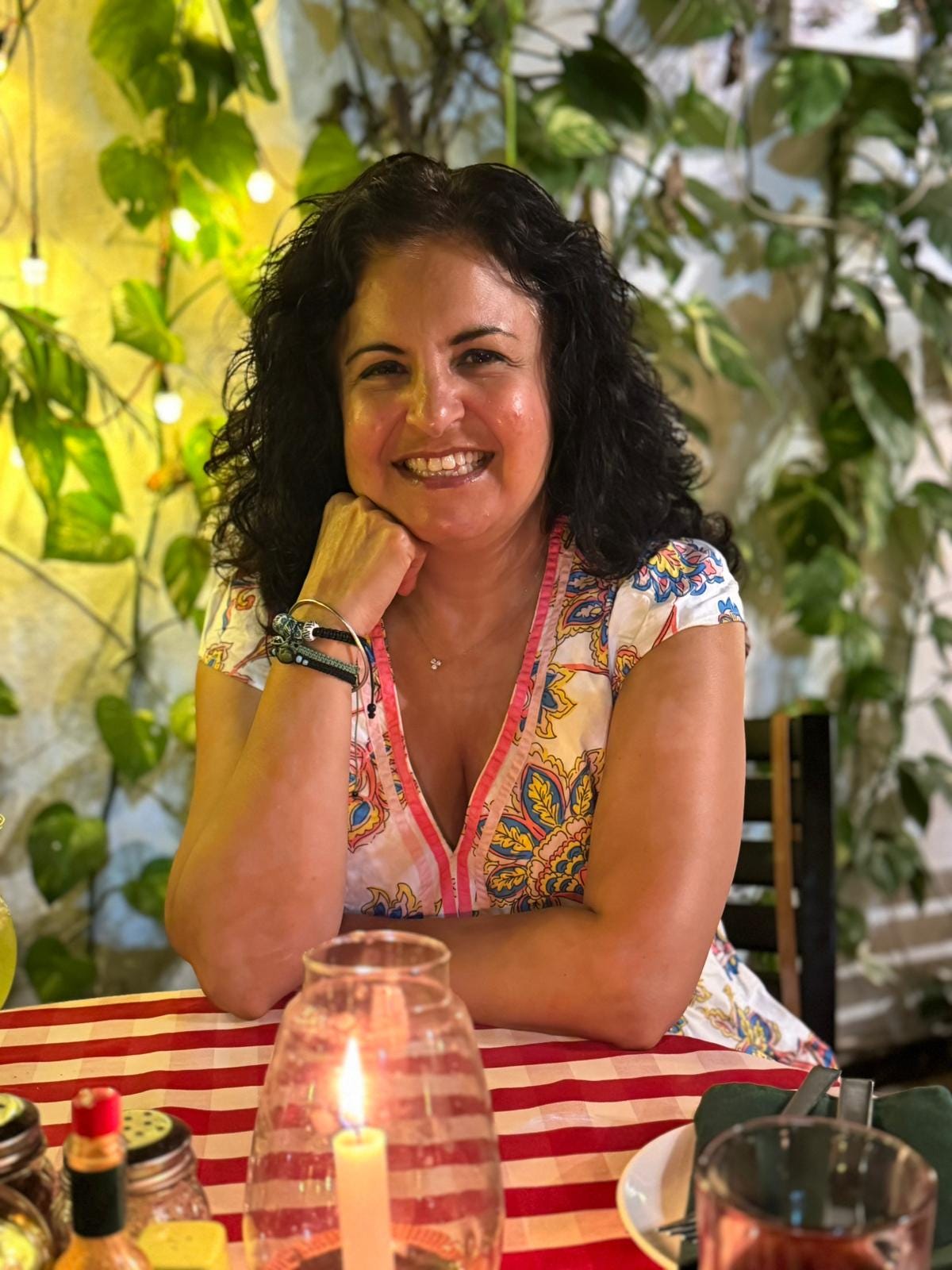
I recently had the pleasure of chatting with Dr Anita, a former GP turned CBT therapist, diagnosed with ADHD at 55. Anita specialise in ADHD-adapted CBT for adults with ADHD and co-existing mood difficulties. Her approach draws on both professional expertise and lived experience and is enriched by mindfulness and Buddhist teachings. Our community already loves her work (especially her writing on Rejection Sensitive Dysphoria), so I gathered questions directly from members and asked her to share her insights.
This conversation touched on shame, boundaries, people-pleasing, co-regulation, and even how ChatGPT can help us manage emotions. It was warm, honest, and full of practical takeaways.
Highlights
Why shame hits ADHDers so hard
How to calm the amygdala when emotions spiral
Why compassion for the inner critic matters
Practical ways to build assertiveness
The role of co-regulation (with people and objects)
Yes, even ChatGPT can help regulate emotions
Using CBT tools tailored for ADHD brains
Introductions
Jeanie: Hi Anita. Thank you so much for joining us to have a chat about some of the problems we face living with ADHD.
I first came across you on Substack when I read one of your excellent articles on RSD. RSD is honestly the bane of my life and so many people in the community. I shared your article straight away, and everyone found it fascinating, helpful, and refreshingly different from the conventional advice we usually get about RSD.
So, thank you so much. It’s such an honour to speak with you. We’ve prepared some questions—not just from me, but also from members of the LNFG neurodivergent community.
Anita: Thank you, Jeanie. It’s really lovely to be talking with you.
Just a little background in case it’s helpful. I’m 58, and I was only diagnosed with ADHD about three or four years ago—so a very late diagnosis. I’d spent the first 20 years of my professional life as a GP. I gave it up in my mid-40s because it was too much. I could feel myself burning out.
In retrospect, I was the typical ADHD butterfly—doing GP training, medical journalism, medical politics, seeing patients, running the practice… all at once.
Discovering I had ADHD made so much sense of my life.
I had already trained in CBT, but hadn't been taught anything about ADHD, so I learned about it as much as I could from lots of professional sources and then increasingly through experience with ADHD clients.
Now I work as a CBT therapist with a special interest, and I suppose expertise, in supporting people with ADHD.
I also write on Substack, which is where you found me, with my article on Rejection Sensitive Dysphoria. RSD is very common among people with ADHD. It’s that sensation of emotional pain—sometimes even physical pain—when you feel criticised or rejected. Sometimes it’s not even real rejection, but just the perception of it, and yet it still feels like being stabbed.
Jeanie: Yes, RSD… I would honestly say it’s the worst part of having ADHD for me. It even tops the constant phone-losing and executive dysfunction. And it’s such a travesty that it’s not even included in the DSM. Talking to a GP who actually believes in RSD is so refreshing.
Anita: You’re right—it’s not in the DSM or in the diagnostic criteria for ADHD. In fact, even emotional regulation isn’t listed, even though we all know it’s a huge part of the condition.
Shame After Dysregulation
Jeanie: The first question from the community is about shame.
How do I deal with spiralling shame after getting emotionally dysregulated? Even when I’ve expressed myself calmly, without causing harm or upset, I still feel a deep shame afterwards. I think this comes from internalised beliefs that it’s wrong to show frustration or to disagree. This feels especially strong as a woman—we’re often labelled as difficult or “too much” for speaking up, even when something genuinely feels unfair. How can CBT help with that kind of shame?
Anita: That’s a really great question—one that I think we all resonate with. And the point about women is very real—our socialisation is often different from men’s.
The first thing I’d always say about shame is this: when you’re dysregulated, the very first thing you need to do is soothe yourself. Neurologically, we have two systems in the brain. There’s the old brain—the amygdala, the limbic system—which reacts to emotions. And there’s the higher brain—the prefrontal cortex—where we can think logically, plan, reflect.
When you feel a really intense negative emotion, the amygdala hijacks your brain. It fires off, and the connection to the prefrontal cortex is cut. That’s why you can’t think straight in those moments.
So when shame kicks in, the first job is to calm the amygdala. Then, and only then, does your thinking brain come back online.
In my enhanced CBT model for ADHD, I put a lot of emphasis on soothing pathways. These are body-first techniques—things like breathing, shaking, stretching. You can’t rationalise your way out of shame in that moment, because your rational brain isn’t available. You need to calm your body first.
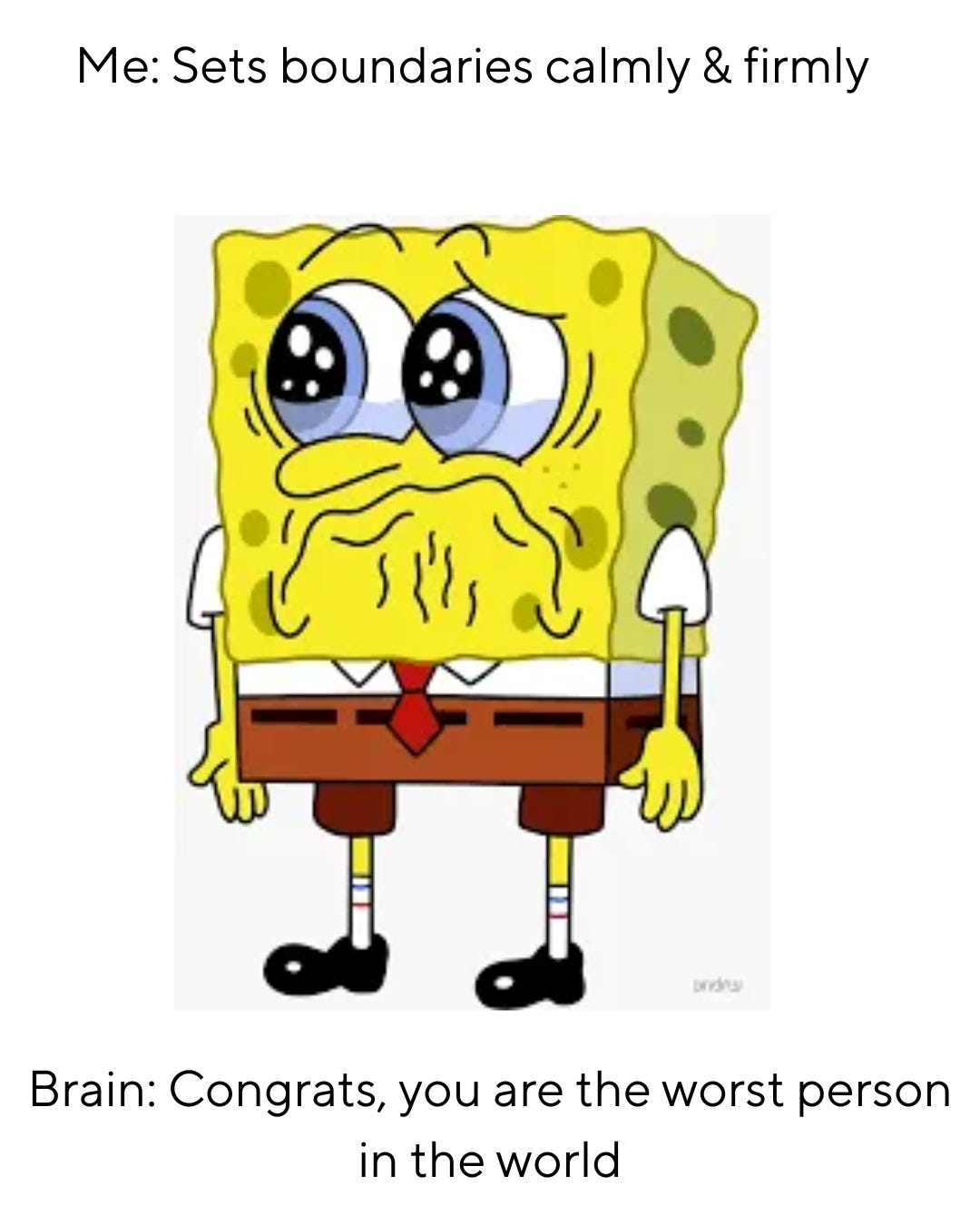
Once you’ve soothed yourself, then you can start looking at where the shame is coming from and what it’s telling you. Shame usually comes from underlying beliefs—like, “I shouldn’t speak up,” or “Other people are always right and I’m wrong.”
So when you do speak up, you contradict those beliefs, and an internal battle begins. That’s where the shame arises.
Compassion for the Inner Critic
Jeanie: Wow. I love that so much. I love how you take a compassionate approach to the inner voices. It reminds me of a video I saw on TikTok where someone spoke directly to their anger, thanked it for trying to protect them, and then said, “Let me handle this.” That really resonated with me, and I started doing it with my anxiety. It loosens the grip.
I also love the idea of experiments. We’re often told to “do the breathing” when we’re struggling, but you’ve gone further—suggesting real-life experiments where we can gather evidence. It’s one thing to say, “I am capable of being right,” but another to go out and prove it. I’ve never heard that suggested for shame before. I think it’s brilliant.
Anita: Yes—behavioural experiments are a big part of CBT. It’s not enough to believe something with your head—you need to believe it with your heart. And the way to do that is by trying things out in the real world.
You start with small, graded experiments, and build upwards. Sometimes the experiment will prove you were wrong—but even then, you learn something.
Jeanie: Yes, that makes so much sense. It’s about chipping away, not expecting to suddenly flip the belief. I had a really bad episode of RSD recently—worse than I’ve had in years—and it helps to remember this is a work in progress. Beliefs bubble up, and we chip away at them bit by bit.
Anita: Exactly. And those beliefs didn’t come from nowhere. They usually come from our early years, when we had very few resources and believed whatever people in authority told us. That conditioning gets handed to us—it’s not something we chose. As adults, though, we can examine those beliefs objectively. Where did they come from? Do they serve me? Are they realistic? Are there other ways of seeing things?
Sometimes it’s about noticing whose voice it is—maybe a parent, maybe a teacher—and then recognising what other voices are present too.
Although I’m primarily a CBT therapist, I also draw on compassion-focused therapy and internal family systems. I still work with fidelity to CBT principles, but I think borrowing from other approaches makes the work richer.
Assertiveness and Boundaries
Jeanie: The second question is about boundaries:
How can I be assertive and hold boundaries when I know I have a case, but the response or interruptions make me feel very uncomfortable? I end up feeling rejected, ashamed, and like I’m being rude or it’s my fault.
Anita: That’s a layered question, because it could be about a skills gap—or it could be about beliefs.
If it’s skills-based, then it’s about learning assertiveness techniques. Things like: deciding what you want, phrasing it fairly, sticking to your point, preparing for refusal, negotiating and compromising. I teach these steps in therapy, and we practice through roleplay.
If it’s not skills, then it may be belief-based. A belief like “I mustn’t ask for help,” or “I shouldn’t ask for what I want.” Then the work is about loosening that belief, not just teaching the skill.
We need to be able to recognise how we’re feeling before we hit a 10 out of 10. If you can tell when you’re in the amber zone, you can intervene. Otherwise, you say nothing until you explode, and then it comes out aggressive rather than assertive.
Jeanie: That’s brilliant, and so practical. I’ll definitely link your toolkit.
Anita: Yes, that can be linked to alexithymia—the difficulty in identifying and describing your emotions. Many people with ADHD have it, and sometimes also delayed processing. That means you might not even realise you were triggered until hours later.
For people with alexithymia, I suggest simplifying it: ask yourself whether your energy is pulling you towards something or away from something. Even that can help you name the feeling and step back a little.
Jeanie: That’s fascinating. And yes, I’ve noticed that with delayed processing—it can take me hours to work out why I’m suddenly down. And sometimes the real trigger isn’t the thing I reacted to most strongly.
Anita: Exactly. And that’s where co-regulation comes in. Sometimes when we can’t regulate ourselves, what we need is someone else to help us regulate. A hug, a kind look, a cup of tea—something that communicates, “I see you, I accept you, I’m here.”
ChatGPT as a Co-Regulator
Anita: You know, I’ve never said this out loud before, but I actually use ChatGPT myself when I’m dysregulated. I’ll type in how I’m feeling, and it helps me regulate.
Jeanie: Oh, I love that! I do the same. Sometimes, when I’ve been really hurt or upset, ChatGPT has helped me regain perspective—reminding me it’s often not about me, but about what might be happening in the other person’s life. That’s enormously soothing.
Anita: Exactly. And what I love is how ChatGPT can mirror back in a succinct way.
I’ll ramble, and then it reflects my words in three or four clear sentences, with empathy. That clarity helps me feel seen.
Jeanie: Yes! I once sent ChatGPT a messy voice note because I couldn’t even type. And the way she reflected it back—so articulate, so clear—I thought, “Wow, that’s exactly what I meant.”
People-Pleasing and Boundaries
Jeanie: The next question is:
How do I set boundaries when I’m a people-pleaser and carry so much internalised shame around it?
Anita: People-pleasing is very common among ADHDers. It often develops as protection—because of deep beliefs like, “My needs are unimportant. If I keep everyone else happy, they won’t notice I’m too much or not enough.”
These beliefs often form into rules: “If I please people, then they won’t reject me.”
And it makes sense we do this. Years of microaggressions—being told we’re odd, wrong, too much—of course we learn to keep people sweet. But then we end up losing sight of our own needs.
Jeanie: Yes—that resonates. For me, the message was always that I was “too much” or “weird.”
Anita: Absolutely. And remember, there’s that saying “might is right.” If 95% of people are neurotypical and have told you your whole life that you’re wrong, you’ll believe them.
“But what you’ve done is found your 5%.”
CBT for ADHD
Jeanie: And the final question is for you personally:
How are you, Dr Anita, using CBT specifically to help neurodivergent people? And how does it impact your own life as someone with ADHD?
Anita: Most of my work is one-to-one therapy, alongside writing on Substack. Over time I’ve developed what I call my “enhanced model” of CBT for adult ADHD.
It brings in ideas from other approaches, but always stays grounded in CBT. There’s a focus on soothing, mindfulness, compassion, and noticing glitches—those moments where two voices or perspectives clash inside you and create dissonance.
I also emphasise basics like sleep, hydration, and nutrition—because therapy doesn’t land if you’re exhausted. There’s psychoeducation, so people understand themselves in the context of ADHD. And there’s a lot of work on executive function: learning to use to-do lists, diaries, alarms, environmental modifications.
Even small changes make a big difference. And all my work is free—nothing behind a paywall—because this should be accessible.
Jeanie: That’s incredible. There really isn’t much out there for people who are “high-functioning” but still struggling.
Anita: Exactly. Sometimes it’s about recognising when a job or environment simply isn’t suited to ADHD brains. That’s as important as learning new strategies.
Jeanie: Thank you so much. This has been absolutely fascinating. Everything you’re doing is so valued.
Anita: Thank you, Jeanie. I really appreciate it.
If you’d like to dive deeper into some of the themes we touched on, these articles by Dr Anita are an excellent place to start:

Free Online Global Event 2nd-3rd October 2025
Making CBT Work for ADHDers – Why standard CBT often doesn’t land, and what can help instead
Tried CBT and felt it didn’t work — even though you were doing it “right”? You’re not the problem.
In this practical, compassionate session, CBT therapist and retired medical doctor, Dr Anita Goraya, explains why unadapted CBT often overlooks the core difficulties ADHDers face — like emotional overwhelm, RSD, alexithymia, and inner conflict. Drawing on both professional and personal experience, she shares how she’s adapted evidence-based techniques to specifically support ADHD brains.
You’ll come away having practised a simple, calming skill to use in moments of distress — plus free resources and tools tailored for ADHDers.


Neurodivergent in London, England and looking for friends? Well, look no more! 👀 Apply to join the LNFG here 🐿️👽

If you’d like to meet people in a more facilitated, supportive setting, come along to one of our Daisy events — a series of structured, neuroinclusive socials — a kinder way to connect, with no awkward small talk or cringe icebreakers, just meaningful conversations where you can choose whether you’re looking for friends, partners, or both

Wow, here I’ve been writing about my ADHD and that of my son’s and I didn’t even realise we both have RSD. I’d never heard of this before and don’t know it’s prevalent amongst ADHDers. I have so many questions. I’m going to research it. Could I please interview you about ADHD on Substack?
Loved the practical clarity here—especially your focus on soothing the amygdala first before tackling shame. After your own late diagnosis, have you noticed any changes in self-compassion or boundaries over time, or does it stay an ongoing balancing act?